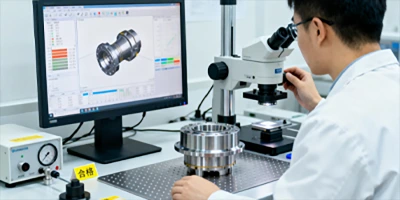
Harnessing the power of fusion energy hinges on precision manufacturing. Discover how cutting-edge techniques are fueling our journey toward sustainable, limitless energy.
The Importance of Precision Manufacturing in Fusion Technology
Fusion energy, often regarded as the holy grail of sustainable power, promises an almost inexhaustible supply of energy. This futuristic technology mimics the processes powering the sun, fusing atomic nuclei to release vast amounts of energy. However, achieving this on Earth demands extraordinary precision, especially in the manufacturing of components. Precision manufacturing is not just a supporting player; it is the linchpin ensuring that the theoretical becomes practical and reliable.
Precision manufacturing is crucial for creating the ultra-high accuracy and exact specifications required in fusion reactors. The fabrication of components must adhere to stringent tolerances to withstand extreme conditions such as intense heat, pressure, and magnetic fields. Any deviation, even on a microscopic level, could spell disaster, leading to inefficiencies or catastrophic failures. The integrity and performance of fusion reactors are thus directly linked to the precision of their manufacturing processes.
Moreover, the complexity of fusion reactors means that each component must fit seamlessly with others, akin to a highly sophisticated jigsaw puzzle. This interdependence amplifies the stakes, as a flaw in one part can compromise the entire system. Precision manufacturing ensures that these components are not only made to exact specifications but also that they interact flawlessly under operational conditions. In essence, the journey towards fusion energy is as much a story of manufacturing prowess as it is of scientific discovery and engineering innovation.

Key Components of Fusion Reactors and Their Manufacturing Needs
Fusion reactors are intricate machines composed of numerous specialized components, each with its own unique manufacturing challenges. The most critical of these include the vacuum vessel, magnetic confinement systems, and the first wall and divertor. Each of these components must be manufactured with an unprecedented level of precision to ensure the reactor operates efficiently and safely.
The vacuum vessel, often considered the heart of the fusion reactor, contains the plasma where the fusion reactions occur. This vessel must be impeccably sealed to maintain a high vacuum and withstand extreme thermal and mechanical stresses. Manufacturing this component involves advanced welding and metallurgical processes to ensure no leaks or structural weaknesses. The materials used must also be of the highest quality, capable of resisting degradation over prolonged exposure to harsh conditions.
Magnetic confinement systems, such as those used in tokamaks, require superconducting magnets that generate powerful magnetic fields to confine the plasma. These magnets must be manufactured with meticulous care to ensure uniformity and stability. The superconducting materials themselves must be processed to exacting standards, as any impurities or inconsistencies can lead to performance issues or failures. Additionally, the integration of these magnets into the reactor structure demands precision alignment and secure mounting to maintain the integrity of the magnetic confinement.
The first wall and divertor are the components that directly interact with the plasma, absorbing heat and particles. These parts must be made from materials that can endure extreme thermal loads and neutron bombardment. Manufacturing these components involves not only precision machining but also the development of specialized materials and coatings. The goal is to create surfaces that can withstand the harsh conditions without degrading, thus ensuring the longevity and efficiency of the reactor.
Advances in Precision Manufacturing Techniques for Fusion Energy
The pursuit of fusion energy has spurred significant advancements in precision manufacturing techniques, pushing the boundaries of what is possible. These innovations are critical in meeting the exacting requirements of fusion reactor components, ensuring they perform reliably under extreme conditions. One of the most pivotal advancements is in advanced machining and additive manufacturing.
Advanced machining techniques, such as multi-axis CNC machining, enable the creation of complex geometries with high precision. These machines can operate with incredible accuracy, cutting and shaping materials to tolerances of just a few microns. This level of precision is essential for components that must fit together perfectly and operate flawlessly under demanding conditions. Moreover, advanced machining allows for the use of high-performance materials that are difficult to work with using traditional methods.
Additive manufacturing, or 3D printing, has also revolutionized the production of fusion reactor components. This technique allows for the creation of intricate, bespoke parts that are difficult or impossible to produce using conventional methods. Additive manufacturing is particularly valuable for creating components with complex internal structures, such as cooling channels within the first wall. Additionally, it enables rapid prototyping and iterative testing, accelerating the development process and reducing costs.
Another significant advancement is in metrology and inspection technologies. Precision manufacturing is not only about creating parts with tight tolerances but also about verifying that these tolerances are met. Modern metrology tools, such as coordinate measuring machines (CMMs) and laser scanners, provide highly accurate measurements of complex parts. These tools are essential for quality control, ensuring that every component meets the required specifications before it is integrated into the reactor.
Case Studies: Successful Applications of Precision Manufacturing in Fusion Projects
Several prominent fusion projects around the world have demonstrated the critical role of precision manufacturing in their success. One notable example is the ITER project, an international collaboration aiming to build the world’s largest tokamak. The construction of ITER involves the manufacture of numerous highly specialized components, each requiring exceptional precision. The vacuum vessel, for instance, comprises nine massive segments, each manufactured to exacting standards to ensure a perfect fit when assembled.
Precision manufacturing has also been crucial in the development of the superconducting magnets used in ITER. These magnets are among the largest and most powerful ever built, and their construction involves highly intricate processes. The winding of superconducting cables, the assembly of magnet modules, and the integration of these modules into the reactor all demand extraordinary precision. The success of these processes is a testament to the advanced manufacturing techniques and rigorous quality control measures employed.
Another significant project is the National Ignition Facility (NIF) in the United States, which focuses on inertial confinement fusion. The NIF uses powerful lasers to compress and heat a small fuel pellet, creating the conditions necessary for fusion. The precision required in the manufacture and alignment of the laser components is staggering. Each of the facility’s 192 laser beams must be precisely aligned and focused to achieve the desired compression, and any deviation can affect the outcome. The success of the NIF in achieving significant milestones in fusion research underscores the importance of precision manufacturing.
In the UK, the Joint European Torus (JET) has also benefited from advances in precision manufacturing. The JET has been a pivotal facility for fusion research, achieving several world records for fusion power output. The upgrade of JET’s components, including the installation of a new first wall and divertor, relied heavily on precision manufacturing. The new components were manufactured to exacting standards to ensure they could withstand the increased thermal and mechanical loads, enabling JET to continue its pioneering research.
Challenges Facing Precision Manufacturing in the Fusion Energy Sector
Despite the significant advancements in precision manufacturing, the fusion energy sector still faces numerous challenges. One of the primary challenges is the sheer complexity and scale of fusion reactor components. These components are often large, intricate, and made from specialized materials, making their manufacture and assembly highly demanding. Achieving the necessary precision on such a scale requires cutting-edge technology and highly skilled personnel, both of which are in limited supply.
Another challenge is the development and processing of materials that can withstand the extreme conditions within a fusion reactor. The materials used must be able to endure high temperatures, intense radiation, and mechanical stresses without degrading. Developing these materials involves extensive research and testing, and manufacturing them to the required precision is no small feat. The need for high-performance materials also drives up costs, adding to the financial challenges of fusion energy development.
Quality control and assurance present additional hurdles. Ensuring that every component meets the exacting specifications required for a fusion reactor involves rigorous inspection and testing processes. This not only adds to the complexity and cost of manufacturing but also requires advanced metrology tools and highly skilled inspectors. Any defect or deviation, no matter how small, can have significant consequences, making quality control a critical but challenging aspect of precision manufacturing.
The fusion energy sector also faces challenges related to scalability and mass production. While precision manufacturing techniques have made significant strides, scaling these techniques to produce the large quantities of components needed for commercial fusion reactors is a formidable task. The transition from prototype to production involves overcoming numerous technical and logistical obstacles, including supply chain issues, manufacturing capacity, and cost management. Addressing these challenges is essential for the successful commercialization of fusion energy.
The Future of Precision Manufacturing in Fusion Energy Development
The future of precision manufacturing in fusion energy development is bright, with ongoing advancements promising to overcome current challenges and drive the field forward. One of the most exciting prospects is the continued evolution of additive manufacturing. As 3D printing technology improves, it will enable the production of even more complex and high-performance components. The ability to print parts with tailored properties and internal structures will be invaluable in optimizing the performance and durability of fusion reactor components.
Another promising development is the integration of artificial intelligence (AI) and machine learning (ML) into precision manufacturing processes. These technologies can enhance the accuracy and efficiency of manufacturing by optimizing process parameters, predicting and preventing defects, and automating quality control. AI and ML can also facilitate the design of more efficient and resilient components by analyzing vast amounts of data and identifying patterns that human designers might miss. The adoption of these technologies will be a game-changer for precision manufacturing in the fusion energy sector.
Advances in material science will also play a crucial role in the future of precision manufacturing for fusion energy. The development of new materials with superior properties, such as higher thermal and radiation resistance, will be essential for building more robust and efficient reactors. Innovations in material processing and coating technologies will further enhance the performance and longevity of critical components. These advancements will not only improve the feasibility of fusion energy but also reduce costs and increase the scalability of reactor production.
Collaboration between manufacturers, research institutions, and policymakers will be vital in driving these advancements forward. By fostering partnerships and knowledge-sharing, stakeholders can accelerate the development and adoption of cutting-edge manufacturing techniques. Investment in education and training will also be essential to ensure a skilled workforce capable of meeting the demands of precision manufacturing in the fusion energy sector. With the right support and collaboration, the future of precision manufacturing in fusion energy holds tremendous potential.
Collaborations Between Manufacturers and Research Institutions
The successful development of fusion energy hinges on effective collaboration between manufacturers and research institutions. These partnerships are essential for bridging the gap between scientific research and practical implementation, ensuring that theoretical advancements translate into real-world solutions. By working together, manufacturers and researchers can leverage their respective expertise to overcome technical challenges and drive innovation in precision manufacturing.
One of the key benefits of these collaborations is the ability to share knowledge and resources. Research institutions often have access to advanced facilities and cutting-edge technologies that manufacturers may not possess. By partnering with these institutions, manufacturers can gain valuable insights into new materials, processes, and techniques. Conversely, manufacturers bring practical experience and expertise in large-scale production, helping researchers to understand the challenges of scaling up and commercializing their innovations.
Collaborative projects also provide opportunities for interdisciplinary research and development. Fusion energy requires expertise in fields such as physics, engineering, materials science, and manufacturing. By combining their strengths, manufacturers and research institutions can tackle complex problems from multiple angles, leading to more innovative and effective solutions. These collaborations can also foster the development of new technologies and processes that benefit not only the fusion energy sector but also other industries.
Furthermore, partnerships between manufacturers and research institutions can facilitate the transfer of technology and knowledge to the broader industry. By working together, these stakeholders can develop best practices, standards, and guidelines for precision manufacturing in fusion energy. This knowledge can then be disseminated through industry networks, conferences, and publications, helping to raise the overall capability and competitiveness of the sector. Ultimately, these collaborations are essential for driving progress and achieving the goal of sustainable, limitless fusion energy.
Policy and Investment Implications for Precision Manufacturing in Fusion
The development of precision manufacturing for fusion energy has significant policy and investment implications. Governments and policymakers play a crucial role in supporting the research, development, and commercialization of fusion energy technologies. By providing funding, incentives, and regulatory frameworks, they can help to accelerate the progress of precision manufacturing and ensure that the necessary infrastructure and resources are in place.
One of the most important policy measures is the allocation of funding for research and development. Public investment in fusion energy projects and precision manufacturing technologies is essential to drive innovation and overcome technical challenges. This funding can support collaborative projects between manufacturers and research institutions, as well as the development of new materials, processes, and techniques. By prioritizing fusion energy in their research agendas, governments can help to ensure that the necessary advancements are made to bring this technology to fruition.
In addition to funding, policymakers can provide incentives to encourage private investment in fusion energy and precision manufacturing. Tax credits, grants, and subsidies can help to offset the high costs and risks associated with developing and commercializing new technologies. These incentives can also stimulate the growth of a robust supply chain and manufacturing ecosystem, ensuring that the necessary components and materials are available at scale. By creating a favorable investment climate, policymakers can attract private capital and drive the commercialization of fusion energy.
Regulatory frameworks are also critical for the successful development of fusion energy and precision manufacturing. Policymakers must establish clear and consistent regulations that ensure the safety and reliability of fusion reactors while also promoting innovation and competitiveness. This includes setting standards for the design, manufacturing, and operation of fusion reactors, as well as providing pathways for the certification and approval of new technologies. By creating a supportive regulatory environment, policymakers can help to reduce barriers and accelerate the deployment of fusion energy.
Conclusion: The Path Forward for Fusion Energy and Precision Manufacturing
The journey towards harnessing fusion energy is a monumental endeavor that requires the convergence of scientific discovery, engineering innovation, and manufacturing excellence. Precision manufacturing lies at the heart of this journey, enabling the creation of the highly specialized components and systems that make fusion reactors possible. Through advancements in machining, additive manufacturing, metrology, and materials science, precision manufacturing has made significant strides, bringing us closer to the realization of sustainable, limitless energy.
However, the path forward is not without challenges. The complexity and scale of fusion reactor components, the development of high-performance materials, and the need for rigorous quality control present significant hurdles. Addressing these challenges requires continued investment in research and development, as well as the collaboration between manufacturers, research institutions, and policymakers. By fostering partnerships and leveraging their collective expertise, stakeholders can drive the innovation and progress needed to overcome these obstacles.
The future of precision manufacturing in fusion energy is bright, with emerging technologies such as additive manufacturing, artificial intelligence, and advanced materials promising to revolutionize the field. These innovations will not only enhance the performance and reliability of fusion reactors but also reduce costs and increase scalability. As we continue to push the boundaries of what is possible, the dream of fusion energy becomes ever more attainable.
Ultimately, the successful development of fusion energy will have profound implications for our energy landscape, offering a sustainable and virtually limitless source of power. By supporting precision manufacturing and fostering collaboration between all stakeholders, we can accelerate the journey towards this transformative technology. The path forward is clear, and with continued dedication and innovation, fusion energy can become a reality, powering a brighter and more sustainable future for all.