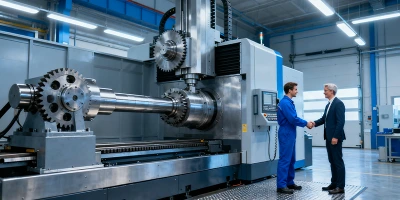
Unlock the precision of five-axis CNC machining by mastering the A, B, and C axes. Discover how they enhance versatility and efficiency in complex designs.
Overview of Five-Axis Machining
Five-axis CNC (Computer Numerical Control) machining represents the pinnacle of precision engineering. It allows for the simultaneous movement of tools and parts along five different axes, enabling the creation of complex geometries that would be impossible to achieve with traditional three-axis systems. In a standard three-axis CNC machine, the cutting tool moves along the X, Y, and Z axes. However, in five-axis machining, two additional rotational axes—commonly referred to as the A, B, and C axes—come into play, providing a new dimension of flexibility and precision.
The versatility of five-axis machining is unmatched. It is widely utilized in industries such as aerospace, automotive, medical device manufacturing, and mold making. The added degrees of freedom allow for the creation of intricate designs, including undercuts and deep cavities, without the need for repositioning the workpiece. This not only saves time but also increases accuracy, as the workpiece remains fixed in a single setup, reducing the chances of human error.
Moreover, five-axis machining enhances the tool’s contact with the workpiece, improving the surface finish and extending the tool’s lifespan. When dealing with complex parts, the ability to tilt and rotate the tool or the workpiece minimizes the need for multiple fixtures and setups. This streamlined process results in higher throughput and reduced production costs, making five-axis machining an invaluable asset in high-precision manufacturing environments.

Understanding the A Axis in CNC Machining
The A axis is one of the rotational axes in five-axis CNC machining, typically allowing the workpiece to rotate around the X axis. This rotation is crucial for machining parts with intricate angles and geometries that would be difficult to achieve with linear movements alone. By incorporating the A axis, manufacturers can perform operations such as drilling, milling, and cutting at various angles, enhancing the machine’s capability to produce complex components.
In practical terms, the A axis provides the ability to tilt the workpiece, giving the cutting tool better access to hard-to-reach areas. This is particularly useful in industries where precision and accuracy are paramount. For example, in the aerospace sector, components often have complex contours and surfaces that require meticulous machining. The A axis allows for the precise positioning of the workpiece, ensuring that every cut is made at the optimal angle, resulting in superior quality and consistency.
Moreover, the A axis plays a significant role in reducing setup times and improving workflow efficiency. By eliminating the need to manually reposition the workpiece for different operations, manufacturers can achieve faster cycle times and higher productivity. This not only reduces labor costs but also minimizes the risk of errors associated with manual handling. As a result, the A axis is a critical component in achieving the high standards of precision and efficiency demanded by modern manufacturing processes.
Understanding the B Axis in CNC Machining
The B axis is another pivotal element in five-axis CNC machining, providing rotational movement around the Y axis. This axis is essential for creating complex geometries and achieving precise angular cuts that are critical in advanced manufacturing applications. The B axis allows the machine to tilt the tool or the workpiece, enabling it to approach the material from different angles and orientations. This versatility is crucial for producing parts with intricate features and tight tolerances.
In industries such as automotive and medical device manufacturing, the B axis is invaluable for creating components with complex shapes and contours. For instance, in the production of engine components, the ability to rotate the tool around the B axis allows for the precise machining of intricate features such as ports and chambers. Similarly, in medical device manufacturing, the B axis enables the creation of complex implants and prosthetics with exceptional accuracy and surface finish.
Furthermore, the B axis enhances the machine’s ability to perform simultaneous five-axis machining, where all five axes work in unison to create complex parts in a single setup. This capability significantly reduces the need for multiple setups and fixtures, streamlining the production process and increasing efficiency. By minimizing the number of setups, manufacturers can achieve higher throughput and lower production costs, making the B axis a vital component in modern CNC machining.
Understanding the C Axis in CNC Machining
The C axis in five-axis CNC machining provides rotational movement around the Z axis. This axis is crucial for achieving the full range of motion required for complex machining operations. By incorporating the C axis, the machine can rotate the workpiece or the tool, allowing for precise angular cuts and intricate geometries that would be difficult to achieve with linear movements alone. The C axis is particularly useful for machining parts with complex features and tight tolerances.
In practical applications, the C axis is essential for creating components with intricate contours and surfaces. For example, in the aerospace industry, the C axis is used to machine turbine blades with precise angles and surfaces. Similarly, in the production of medical devices, the C axis allows for the creation of complex implants and prosthetics with exceptional accuracy and surface finish. The ability to rotate the workpiece or the tool around the C axis enables the machine to approach the material from different angles, ensuring that every cut is made with precision.
Moreover, the C axis enhances the machine’s ability to perform simultaneous five-axis machining, where all five axes work together to create complex parts in a single setup. This capability significantly reduces the need for multiple setups and fixtures, streamlining the production process and increasing efficiency. By minimizing the number of setups, manufacturers can achieve higher throughput and lower production costs, making the C axis a vital component in modern CNC machining.
The Importance of A, B, and C Axes in Precision Engineering
The integration of the A, B, and C axes in five-axis CNC machining is a game-changer for precision engineering. These rotational axes provide the flexibility and precision required to produce complex geometries and intricate features that are essential in advanced manufacturing applications. By allowing the machine to tilt and rotate the workpiece or the tool, the A, B, and C axes enable the creation of parts with exceptional accuracy and surface finish.
In industries such as aerospace, automotive, and medical device manufacturing, the ability to produce components with tight tolerances and intricate geometries is critical. The A, B, and C axes provide the necessary range of motion to achieve these requirements, ensuring that every cut is made with precision. This is particularly important in applications where even the smallest deviation from the design specifications can result in significant performance issues. By incorporating the A, B, and C axes, manufacturers can achieve the high standards of precision and quality demanded by these industries.
Moreover, the A, B, and C axes play a crucial role in reducing setup times and improving workflow efficiency. By eliminating the need to manually reposition the workpiece for different operations, manufacturers can achieve faster cycle times and higher productivity. This not only reduces labor costs but also minimizes the risk of errors associated with manual handling. As a result, the A, B, and C axes are essential components in achieving the high standards of precision and efficiency demanded by modern manufacturing processes.
Applications of Five-Axis CNC Machining
The applications of five-axis CNC machining are vast and varied, spanning multiple industries and sectors. In the aerospace industry, five-axis machining is used to produce complex components such as turbine blades, engine parts, and structural components. The ability to create intricate geometries and tight tolerances is critical in this industry, where even the smallest deviation from the design specifications can result in significant performance issues.
In the automotive industry, five-axis machining is used to produce engine components, transmission parts, and intricate body panels. The ability to create complex shapes and contours with precision is essential in this industry, where high performance and reliability are paramount. Five-axis machining allows for the production of components with exceptional accuracy and surface finish, ensuring that every part meets the stringent quality standards demanded by the automotive industry.
In the medical device manufacturing industry, five-axis machining is used to produce complex implants, prosthetics, and surgical instruments. The ability to create intricate geometries and tight tolerances is critical in this industry, where even the smallest deviation from the design specifications can result in significant performance issues. Five-axis machining allows for the production of components with exceptional accuracy and surface finish, ensuring that every part meets the stringent quality standards demanded by the medical device manufacturing industry.
Advantages of Using Five-Axis CNC Machining
The advantages of using five-axis CNC machining are numerous and significant. One of the primary benefits is the ability to create complex geometries and intricate features with exceptional precision and accuracy. The addition of the A, B, and C axes provides the flexibility and range of motion required to achieve these requirements, ensuring that every cut is made with precision.
Another advantage of five-axis machining is the reduction in setup times and the improvement in workflow efficiency. By eliminating the need to manually reposition the workpiece for different operations, manufacturers can achieve faster cycle times and higher productivity. This not only reduces labor costs but also minimizes the risk of errors associated with manual handling. As a result, five-axis machining is an invaluable asset in high-precision manufacturing environments.
Moreover, five-axis machining enhances the tool’s contact with the workpiece, improving the surface finish and extending the tool’s lifespan. When dealing with complex parts, the ability to tilt and rotate the tool or the workpiece minimizes the need for multiple fixtures and setups. This streamlined process results in higher throughput and reduced production costs, making five-axis machining an invaluable asset in high-precision manufacturing environments.
Common Challenges and Solutions in Five-Axis Machining
Despite its numerous advantages, five-axis CNC machining also presents several challenges that manufacturers must overcome to achieve optimal results. One of the primary challenges is the complexity of programming and setup. The addition of the A, B, and C axes requires advanced programming skills and sophisticated software to ensure that the machine operates correctly and produces the desired results.
To address this challenge, manufacturers can invest in advanced CAD/CAM software that simplifies the programming and setup process. These software solutions provide intuitive interfaces and advanced features that streamline the programming process and ensure that the machine operates correctly. Additionally, manufacturers can invest in training programs to enhance the skills of their operators and programmers, ensuring that they have the knowledge and expertise required to operate five-axis CNC machines effectively.
Another common challenge in five-axis machining is the risk of collisions between the tool and the workpiece. The added degrees of freedom provided by the A, B, and C axes increase the risk of collisions, which can result in significant damage to the machine and the workpiece. To mitigate this risk, manufacturers can invest in advanced collision detection and avoidance systems that monitor the machine’s movements and prevent collisions. These systems provide real-time feedback and alerts, ensuring that the machine operates safely and efficiently.
Conclusion and Future Trends in CNC Machining
In conclusion, five-axis CNC machining represents the pinnacle of precision engineering, providing the flexibility and precision required to produce complex geometries and intricate features. The integration of the A, B, and C axes enhances the machine’s capability to perform advanced machining operations, ensuring that every cut is made with precision and accuracy. The applications of five-axis machining are vast and varied, spanning multiple industries and sectors, and the advantages of using this technology are numerous and significant.
Looking to the future, the trends in CNC machining are likely to focus on further enhancing the precision and efficiency of five-axis machining. Advances in CAD/CAM software, collision detection and avoidance systems, and training programs will continue to improve the capabilities of five-axis CNC machines, ensuring that manufacturers can achieve the high standards of precision and quality demanded by modern manufacturing processes. Additionally, the integration of artificial intelligence and machine learning technologies is likely to play a significant role in the future of CNC machining, providing advanced capabilities and further enhancing the precision and efficiency of five-axis machining.